English
 Português
 Русский
 Español
 Français
 عربي
 Tiếng Việt
 हिन्दी
 Indonesia
 Türkçe

FAQ
LONGXU Product & Service FAQ
This FAQ section addresses frequently asked questions about LONGXU machinery, installation, warranty, shipping, and after-sales service.
Are you a manufacturer or a trading company?
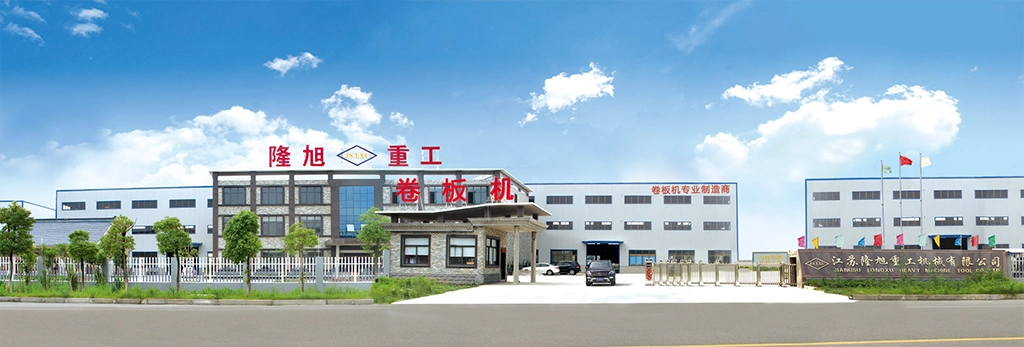
We are a professional manufacturer of plate rolling machines. All machines are designed, assembled, and tested in our own factory in China.
Do you offer customized machines?
Yes, we provide customized solutions based on your material thickness, width, bending diameter, and production needs. Customization includes roller size, motor power, control system, and structure type.
What is your production lead time?
For standard models, production typically takes 15 to 30 working days. Custom machines may take longer, depending on specifications. We'll provide an accurate schedule after order confirmation.
Can your machines be equipped with CNC or PLC systems?
Yes, we offer optional CNC/PLC systems from Siemens, Mitsubishi, Delta, etc., with touch screen control, programmable settings, and safety features.
Can you help with shipping and customs clearance?
Yes. We support FOB, CFR, CIF terms and can assist with export customs clearance, sea freight booking, and port delivery.
What are your standard T/T payment terms?
Our standard payment terms are 30% deposit and 70% balance before shipment. The deposit is paid after the order and payment terms have been confirmed. The remaining balance must be paid before shipment, according to the agreed terms in the sales contract.
Can I inspect the machine before shipment?
Yes. We can discuss suitable pre-shipment inspection arrangements. Available options may include: Photos of the machine and its components Videos showing machine testing and operation Live video inspection An on-site inspection at our factory Please contact our sales team to arrange the inspection method and schedule. Any inspection and acceptance requirements should be confirmed before the order is finalized.
How do I make an international T/T payment?
You can arrange an international bank transfer through your bank using the beneficiary and bank details provided in our official payment instructions. Before making a transfer, carefully verify the beneficiary name, bank information, payment currency, and amount against your confirmed sales documents. If you receive a notification about changed bank details, verify it through a previously established and independently confirmed company contact before sending funds.
Who pays the international bank transfer fees?
International T/T payments may involve fees charged by the sending bank, intermediary banks, and the receiving bank. The responsibility for these charges should be confirmed in your quotation or sales contract. Please check the applicable fees with your bank before arranging the transfer.
How long does an international T/T transfer take?
The transfer time depends on the banks involved, the sending and receiving countries, the payment currency, intermediary banks, and any required compliance checks. We recommend allowing sufficient time for the funds to arrive and be confirmed. Please consult your bank for an estimated transfer time.
Can payment terms be customized for different machinery orders?
Yes. Payment terms can be discussed depending on the machine model, order value, and project requirements. Although our standard terms are 30% deposit and 70% balance before shipment, any alternative arrangement must be reviewed and confirmed by both parties in writing before the order is finalized.
What is the fundamental difference between a 3-roll and a 4-roll plate rolling machine?
The core difference lies in the roller configuration and the resulting bending mechanics. The 4-roll plate rolling machine was developed to overcome the straight edge problem of traditional 3-roll machines, offering better prebending performance and higher rolling accuracy.
What is a flat spot or straight edge?
Flat spot/straight edge refers to the unrolled flat section left at both ends of a plate after rolling. Traditional 3-roll machines usually leave 150-200mm straight edges, causing material waste and extra processing costs. Thanks to its advanced prebending function, a 4-roll plate rolling machine can minimise or eliminate this problem, achieving better roundness, higher accuracy and lower production costs.
Which machine is better for thick plate or high-volume production?
3-roll machines are traditionally preferred for extremely thick plates due to their robust structure and strong bending capability. However, 4-roll machines are the better choice for precision, automation, and high-volume production. With better plate positioning, advanced prebending, and CNC control, 4-roll machines provide higher efficiency, repeatability, and lower labor costs, making them widely used in industries such as wind towers and pressure vessels.
What are the overall dimensions and weight of the machine?
The overall dimensions and weight depend on the machine model and configuration. Before shipment, we provide a complete packing and transportation plan, including machine dimensions, weight, lifting points, and recommended transportation methods.
Can the machine be disassembled for transportation?
Yes. For large-size equipment, some components can be disassembled before shipment, such as the hydraulic station, electrical cabinet, support devices, and certain mechanical assemblies. Our engineers will provide detailed installation drawings and guidance to ensure smooth reassembly at the customer's factory.
What preparation is required before machine installation?
Before installation, customers should prepare: A.Suitable workshop space B.Proper foundation according to machine requirements C.Power supply connection D.Lifting equipment with sufficient capacity Note: Hydraulic oil and other necessary materials
Do you provide installation and commissioning services?
Yes. We provide professional installation and commissioning support. Customers can choose: Remote installation guidance by video call Online technical support On-site engineer service according to project requirements Our engineers will help ensure the machine achieves stable operation after installation.
What information is required to select the right machine model?
To recommend the most suitable machine, we need the following information: Material grade Maximum thickness Maximum plate width Minimum rolling diameter Product shape and application Production requirements Required automation level These factors directly affect machine capacity and configuration.
Why is material grade important when selecting a machine?
Material strength has a significant influence on machine capacity. For example, rolling a 40 mm carbon steel plate and rolling a 40 mm high-strength steel plate such as Q690 or A517 require different machine forces. Therefore, customers should provide the actual material specification to ensure accurate machine selection.
What types of products can be manufactured with your machines?
Our machines are widely used in industries including: Pressure vessel manufacturing Storage tank production Hydropower penstock fabrication Shipbuilding Wind tower manufacturing Steel structure fabrication Construction machinery
Do I need a CNC automatic control system?
It depends on your production requirements. A CNC system is recommended for: Mass production High repeatability requirements Multiple operators Complex rolling processes Manual or semi-automatic machines may be suitable for customized or low-volume production.
Does the machine have energy-saving options?
Yes. For customers with higher requirements for energy efficiency, we can provide solutions such as: Servo motor pump systems Variable displacement hydraulic systems Optimized hydraulic circuit design These solutions help reduce energy consumption while maintaining performance.
Still have questions? We're here to help!
Contact Us